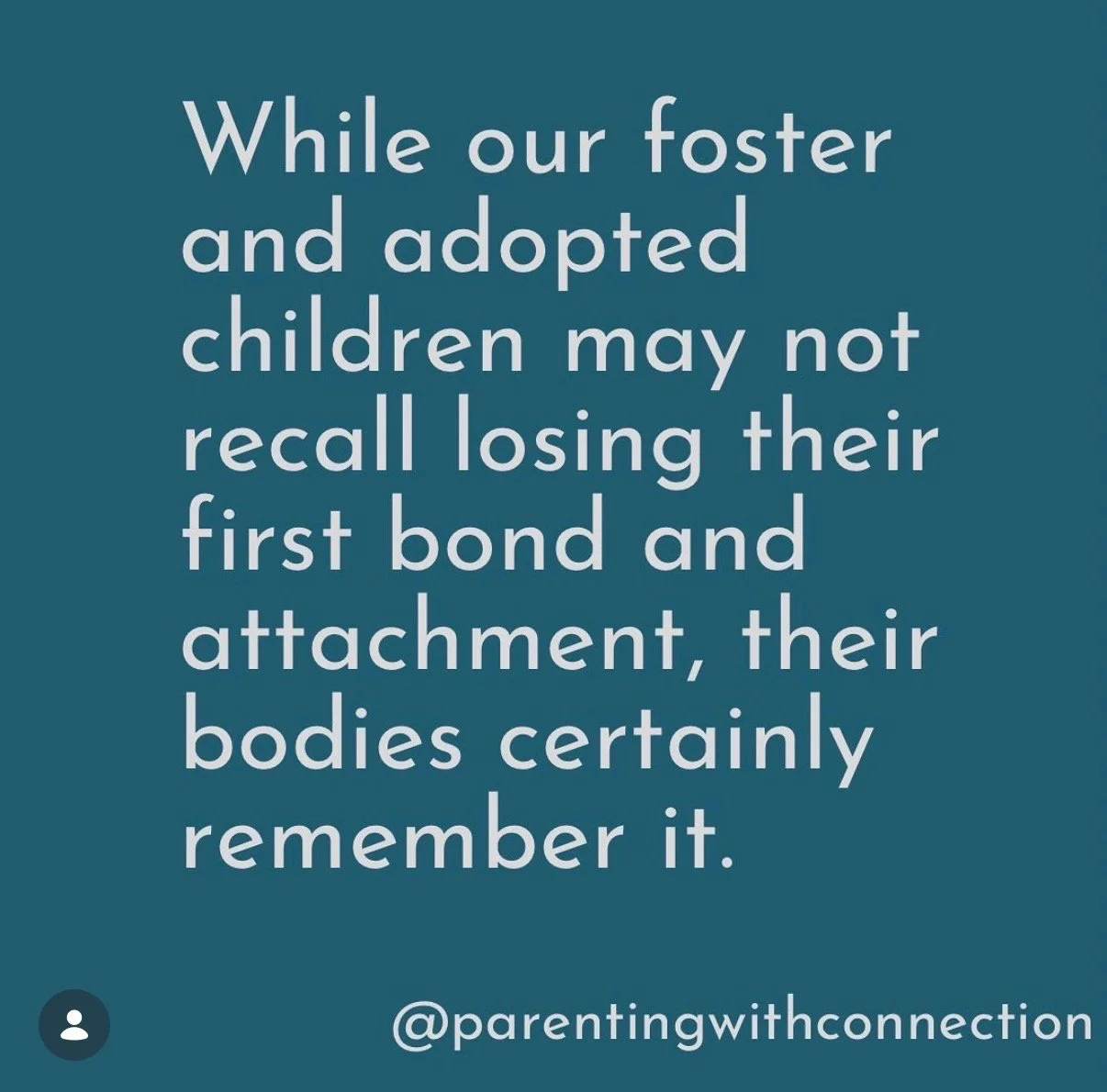
As therapists, adoptive parents, and for Helene, as an adoptee, this is something we return to again and again, both in our work and in our own homes:
Trauma is stored in the body.
We don’t just know this because of research (though neuroscience and trauma studies strongly support it).
We know it because we’ve lived it.
We’ve sat on the floor with children whose reactions didn’t match what we expected of the moment.
We’ve felt the tightness in our own chests when behaviors caught us off guard.
We’ve asked ourselves, Why is this so hard? and What am I missing?
When Behavior Doesn’t Make Sense… Until It Does
What trauma research and neuroscience have allowed us to understand is this:
Children’s behavior is not random. It is communication.
When a child’s nervous system has learned that the world can be unsafe—whether through adoption, early loss, prenatal stress, medical trauma, or other forms of adversity—their body may react long before their thinking brain has a say.
Their behavior is telling us what their body is experiencing.
Adoption, Trauma, and the Body
In adoption, this is especially important to name.
Even in the most loving, intentional adoptive families, adoption begins with loss. And loss lives in the body. It’s an especially complex loss within a family, because often as adoptive parents, our greatest joy comes from our child’s deepest loss. This can be a heavy place to sit.
The Impact
We’ve seen how early experiences can show up later in ways that don’t always look like what people expect trauma to look like.
Sometimes it looks like:
Hypervigilance or control
Big emotions over “small” things
Difficulty with transitions
Resistance to help or closeness
A child who seems “fine” but is holding everything inside
These aren’t signs of failure—by the child or the parent.
They’re signs of a nervous system doing its best to stay safe.
Moving from Control to Curiosity
When behaviors are intense, our instinct (and often the advice we receive) is to try to fix or control them. But we know that behavior change without nervous system support doesn’t last.
Instead, we practice shifting our mindset from:
How do I stop this?
to
What is my child’s body telling me right now?
This doesn’t mean there are no boundaries. It doesn’t mean anything goes.
It means we lead with curiosity, connection, and regulation before correction.
When we slow down and wonder about what’s underneath the behavior, we create space for healing—not just compliance.
Helping Our Children Feel Different
At With Connection, we often say that the goal isn’t simply to help children behave differently.
It’s to help them feel different.
To feel:
Safer in their bodies
More settled in relationships
Less alone with big sensations and emotions
When children feel more regulated and understood, behavior naturally shifts. Not because they’re trying harder—but because their nervous system doesn’t have to work so hard anymore.
And truly, this is what we want for all kids!
Not perfection. Not obedience. But a felt sense of safety, belonging, and connection.
Trauma-Informed Therapy for Children and Families in Portland, Oregon
We created With Connection because we wanted a place where families could feel deeply seen and supported.
Our work is grounded in:
Trauma-informed and attachment-focused therapy
Nervous-system-based approaches
Lived experience as adoptive parents
Honoring adoptee voices and experiences
If you’re a parent or caregiver in the Portland area feeling overwhelmed by big behaviors or wondering how to support your child more compassionately, you’re not alone. And you’re not doing it wrong.
We’d be honored to walk alongside you.