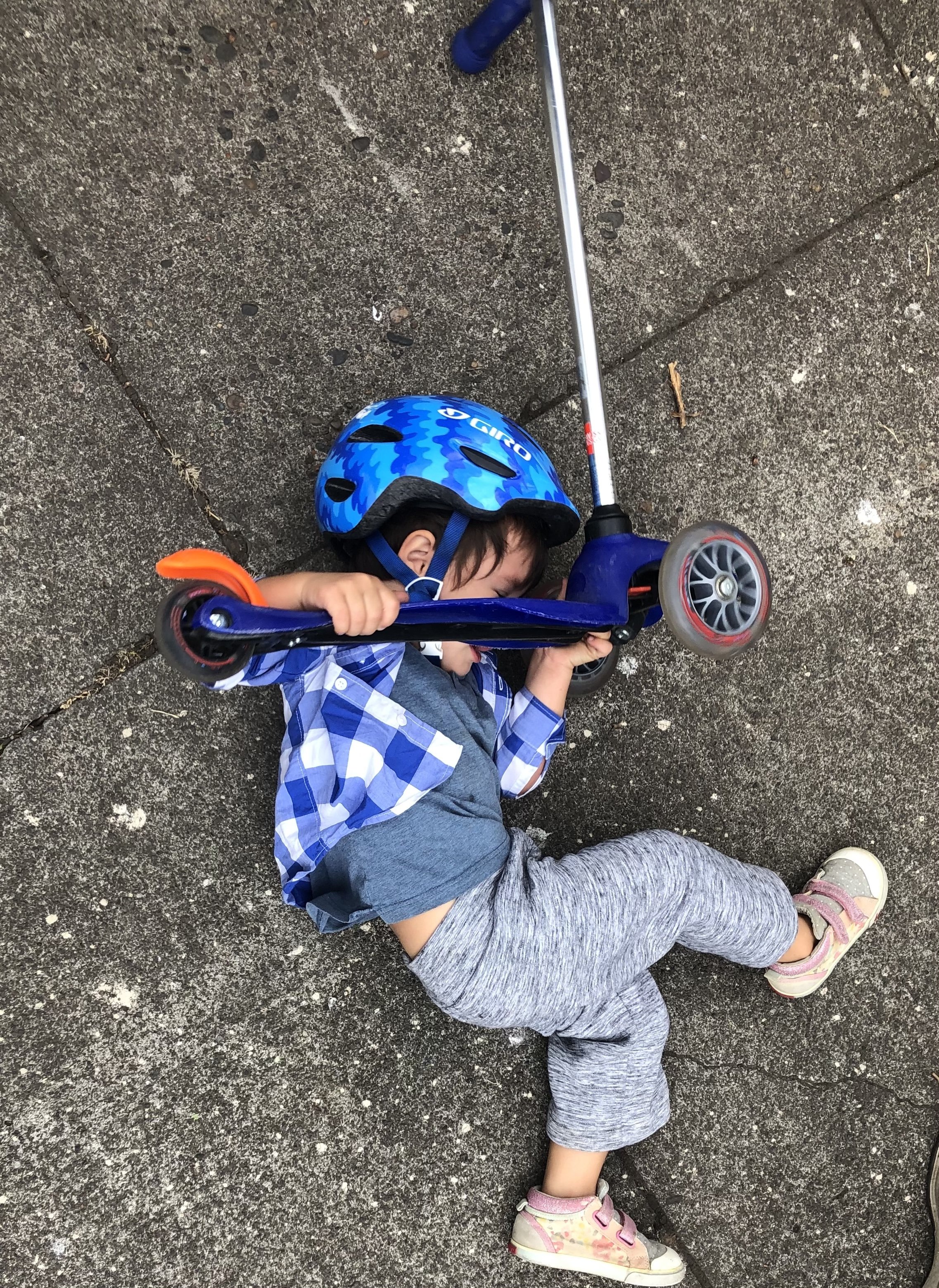
"It feels like everything turns into a meltdown."
"She gets so upset over the smallest things."
"I know he's safe now… so why does he still react this way?"
These are some of the questions I hear most often from adoptive parents, and truly, they're good questions.
Because from the outside, many of these behaviors don't make sense. Your child melts down because you cut their sandwich the "wrong" way. They panic when plans change. They push you away after asking you to stay close. They seem to overreact to things that other children hardly notice.
It's easy to wonder, Why is this happening?
But I think there's an even better question: What has my child's nervous system learned to expect?
That question changes how we see our children.
Children's Brains Are Built to Learn From Experience
Every child's brain is constantly asking one question: "What should I expect next?"
Our brains are prediction machines. They learn from experience. Children don't simply react to what's happening in front of them, they react to what their nervous system predicts is about to happen next.
If a child repeatedly experiences comfort when they're scared, their brain begins to predict that comfort is available. If they experience consistent caregivers, their brain learns that adults are dependable. If they experience safety, connection, and repair, those experiences become the foundation for how they understand relationships.
Children who joined their families through adoption, however, often have a different collection of early experiences. Some experienced multiple caregivers. Some experienced neglect, medical trauma, or institutional care. Some were adopted at birth but still experienced the profound loss of separation from their first mother before they ever had words to understand it.
Every child's story is different. But every experience teaches the brain something.
Behavior Is Often an Expectation, Not a Choice
One of the biggest shifts I hope parents make is this:
Instead of asking, "Why is my child doing this?"
Try asking, "What is my child expecting to happen?"
Behavior isn't just about what's happening right now. It's influenced by everything the nervous system has learned before this moment.
A child who has learned that adults aren't always available may become intensely distressed when you leave the room. A child who has learned that their needs won't always be met may seem controlling, even when there is plenty. A child who has experienced unpredictability may struggle when routines change.
From the outside, these reactions can seem confusing. From the perspective of the nervous system, they often make perfect sense.
Why Traditional Parenting Advice Doesn't Always Work
Many parenting strategies assume that children already feel safe enough to learn. But when a child's nervous system is working hard to protect them, teaching, reasoning, rewards, and consequences often aren't reaching the part of the brain that's in charge.
Imagine trying to teach someone algebra while they're running from a bear. Their brain isn't available for learning. It's focused on survival.
While your child's experience may not involve an actual bear, their nervous system may still be responding as though something important needs protection.
Helping children feel safe isn't "giving in." It's creating the conditions where learning becomes possible.
Here is the Part That Gives Me Hope
If experiences shape expectations, then new experiences can create new expectations.
This is one of the most hopeful things we know about the brain.
Children's nervous systems are continually learning. Every moment of co-regulation. Every repaired rupture. Every predictable routine. Every experience of being comforted instead of shamed. Every time a child discovers, "When I'm scared, someone stays with me."
Their brain is collecting new evidence. Little by little, those experiences begin to change what their nervous system predicts will happen next. Healing doesn't happen because we explain enough.
Healing happens because children experience something different, again and again (and again).
Adoption Is a Lifelong Conversation
One of the biggest misconceptions about adoption is that it is a single conversation.
In reality, children understand adoption differently as they grow. As children grow, the questions change, because children change.
The goal isn't to have one perfect conversation. The goal is to become the kind of family where every question is welcome.
You Do NOt Have to Navigate This Alone
Parenting an adopted child can be incredibly joyful. It can also be confusing, exhausting, and lonely. You do not have to figure it out by yourself. Adoption-competent therapy isn't about "fixing" your child. It's about understanding the experiences that shaped them, strengthening your relationship, and creating new experiences that help your child feel increasingly safe, connected, and understood.
Because when we understand what a child's nervous system has learned, we also begin to see what's possible for it to learn next.